

“`html
Mobile Apps: Build or Die
Introduction
Let’s face it. We’re practically glued to our phones. From ordering that late-night pizza to managing our bank accounts, our lives increasingly revolve around the little rectangles in our pockets. And what powers that convenience? You guessed it: mobile apps.
But here’s the harsh truth: in today’s cutthroat business landscape, having a mobile app isn’t just a “nice-to-have” anymore. It’s quickly becoming a *necessity*. We’re entering an era where businesses that fail to embrace mobile are, quite simply, facing extinction. “Build or die” might sound dramatic, but in the fiercely competitive digital world, it’s becoming a reality for many.
Why the Dramatic Headline? The Short-Term Pain & Long-Term Extinction
Think about your own consumer behavior. When you need a service, do you fire up your laptop and browse countless websites, or do you instinctively reach for your phone and check for an app? For the majority of us, the answer is the latter. This preference for mobile-first experiences has profound implications for businesses.
Short-Term Impacts: Missed Opportunities and Lost Revenue
In the short term, businesses without a strong mobile presence are bleeding potential revenue. Consider these immediate consequences:
- Reduced Customer Engagement: Without an app, you’re missing out on direct communication. Push notifications, personalized offers, and loyalty programs all become harder (or impossible) to implement effectively.
- Lower Conversion Rates: Mobile-optimized websites are good, but apps are often *better*. They provide a smoother, faster, and more personalized user experience, leading to higher conversion rates. Imagine trying to order that aforementioned pizza. An app allows for saved preferences, one-click ordering, and real-time order tracking – a far superior experience than struggling with a clunky mobile website.
- Decreased Brand Visibility: Your app becomes a constant reminder of your brand on your customer’s phone. It’s prime real estate that competitors are vying for. Without it, you’re ceding valuable mindshare.
- Wasted Marketing Spend: You might be driving traffic to your website, but if that website doesn’t translate seamlessly to mobile, you’re essentially throwing marketing dollars down the drain.
Long-Term Extinction: Irrelevance in a Mobile-First World
The long-term consequences are even more severe. Companies that ignore mobile are effectively signing their own death warrant.
- Erosion of Customer Loyalty: Customers are increasingly loyal to brands that make their lives easier. If your competitor offers a superior mobile experience, you’re likely to lose customers over time.
- Falling Behind the Innovation Curve: Mobile apps are not static entities. They’re constantly evolving with new technologies like augmented reality (AR), artificial intelligence (AI), and location-based services. Businesses that don’t adapt will be left behind.
- Damage to Brand Reputation: In the age of instant online reviews and social media, a poor mobile experience (or the lack thereof) can quickly damage your brand reputation.
- Ultimately, Irrelevance: In a world dominated by mobile, businesses that fail to adapt will simply become irrelevant. They’ll struggle to attract new customers, retain existing ones, and compete effectively.
Okay, the doom and gloom is out of the way. Now, what can you actually do about it?
Solutions: Building Your Mobile Future
Thankfully, building a successful mobile app doesn’t require a massive budget or a team of coding geniuses. Here are several practical approaches to consider:
1. The Native App Route: Power & Performance
- What it is: Building separate apps for iOS (Apple) and Android, using their respective programming languages (Swift/Objective-C for iOS, Java/Kotlin for Android).
- Pros: Maximum performance, access to all device features (camera, GPS, etc.), and a truly native user experience that feels seamless and intuitive.
- Cons: Most expensive and time-consuming option, requires separate codebases for each platform, leading to increased maintenance costs.
- When to choose it: If performance is critical, you need access to advanced device features, or your target audience is heavily concentrated on one platform.
- Example: Think of high-performance gaming apps or apps that rely heavily on AR/VR.
2. The Hybrid App Approach: Cost-Effective & Cross-Platform
- What it is: Building an app using web technologies (HTML, CSS, JavaScript) and then wrapping it in a native container. This allows you to deploy the same codebase to both iOS and Android. Frameworks like React Native, Ionic, and Flutter are popular choices.
- Pros: More cost-effective than native development, faster development time, cross-platform compatibility, and access to a large pool of developers.
- Cons: Performance may not be as optimal as native apps, access to device features may be limited or require plugins, and the user experience might not be as truly “native.”
- When to choose it: When you need a cross-platform app quickly and cost-effectively, and your app doesn’t require cutting-edge performance or access to highly specific device features.
- Example: Many e-commerce apps, social media apps, and content-driven apps use hybrid technologies.
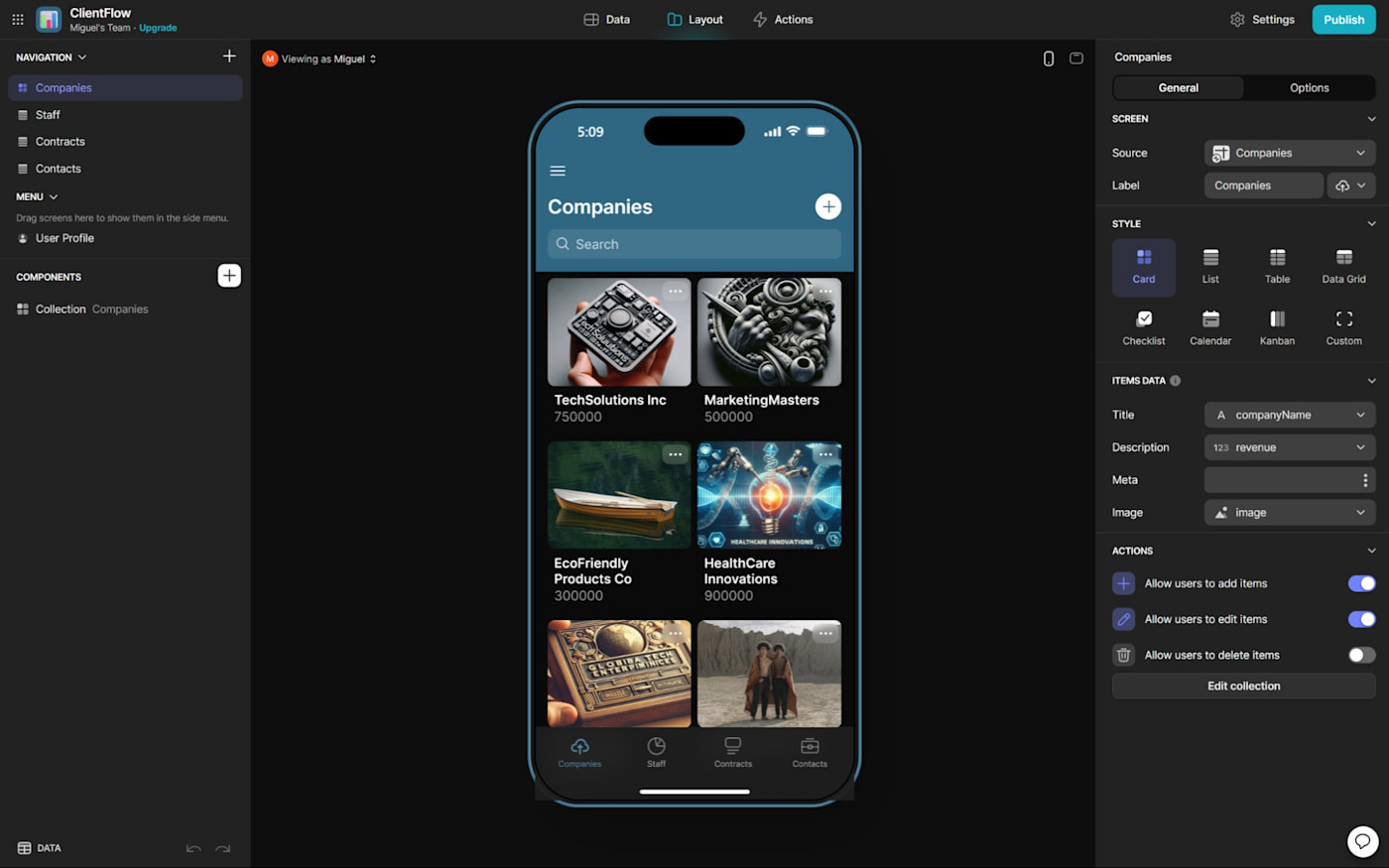
3. The Low-Code/No-Code Solution: Democratizing App Development
- What it is: Using drag-and-drop interfaces and pre-built components to create mobile apps without writing any code (or very little code). Platforms like Appy Pie, Bubble, and Adalo are popular choices.
- Pros: Fastest and most affordable option, requires no coding skills, and allows for rapid prototyping and iteration.
- Cons: Limited customization options, potential performance issues, and dependence on the platform provider.
- When to choose it: If you need a simple app quickly, have limited technical skills or budget, or want to test a business idea before investing in more complex development.
- Example: Small businesses might use no-code platforms to create basic booking apps, information apps, or loyalty programs.
4. Progressive Web Apps (PWAs): The Website That Acts Like an App
- What it is: Websites that are built using modern web technologies to provide an app-like experience on mobile devices. They can be installed on the home screen, work offline, and send push notifications.
- Pros: Easier and cheaper to develop than native or hybrid apps, accessible on all devices (iOS, Android, desktop), and discoverable through search engines.
- Cons: Limited access to device features compared to native apps, and the user experience might not be as polished.
- When to choose it: If you want a wide reach, prioritize SEO, and don’t need access to advanced device features.
- Example: News websites, blogs, and e-commerce stores are increasingly adopting PWAs.
Real-World Examples:
- Starbucks (Native App): Starbucks’ app is a prime example of a successful native app. It offers a seamless experience for ordering, paying, and earning rewards, leading to increased customer loyalty and revenue.
- Instagram (Hybrid App): Instagram’s use of React Native allows them to update quickly on both iOS and Android.
- Webflow (No-Code/Low-Code): Webflow doesn’t just allow website building but also app design with minimal code.
- Forbes (PWA): Forbes leverages PWA technology to deliver a fast and engaging mobile experience to its readers.
Choosing the Right Approach: Asking the Right Questions
Before diving in, ask yourself these critical questions:
- What are your business goals? What problem are you trying to solve with your app?
- Who is your target audience? What are their needs and expectations?
- What is your budget and timeline? How much can you afford to spend, and how quickly do you need the app to be launched?
- What features do you need? Do you need access to specific device features, or are basic functionalities sufficient?
Conclusion: Embrace the Mobile Revolution
The message is clear: ignoring mobile is no longer an option. The future belongs to businesses that embrace mobile technology and provide their customers with seamless, engaging experiences. The good news is that you don’t need to be a tech giant to create a successful mobile app. With the range of options available – from native development to no-code platforms – there’s a solution for every business, regardless of size or budget.
Don’t be intimidated. Take the first step. Start exploring the options, identify your needs, and begin building your mobile future. The reward for embracing the mobile revolution will be increased customer engagement, higher revenue, and a place at the forefront of your industry. The alternative? Well, you already know the answer. Build or die. The choice is yours.
“`
